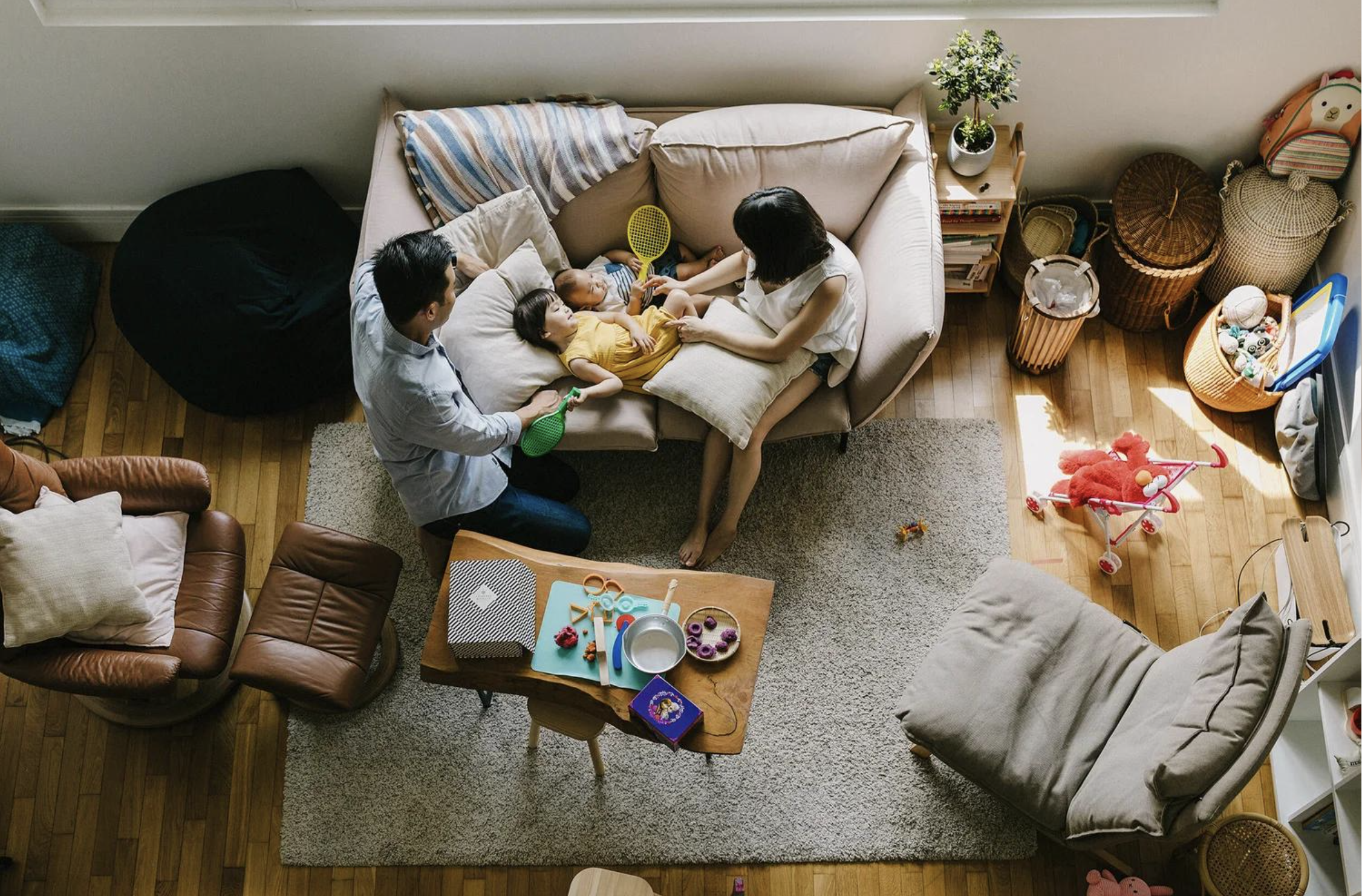
 Not every contribution to a family home comes with a salary or a on the mortgage.
I recently read about a Singapore divorce case where a wife’s contributions to her family were recognised, even though her husband had contributed significantly more financially.
What stayed with me wasn’t the division of assets. It was the recognition that raising a family and caring for a home have value, even when that work doesn’t come with a paycheque.
As a mother of two, this made me pause and reflect.
It reminded me that the value of homemaking is often overlooked, even though it plays such an important role in building a family home.
We often talk about property in terms of ownership, financial contributions and market value. But how often do we recognise the people and sacrifices behind the home itself?
The value of homemaking goes beyond money. It’s reflected in the time, care and sacrifices that help turn a property into a family home.
1. Understanding the Value of Homemaking in a Family Home
In many families, one spouse may earn more while the other takes on greater responsibilities at home.
These responsibilities often include:
- Caring for children: Managing their daily needs, education and school routines.
- Household management: Preparing meals, organising the home and ensuring everything runs smoothly.
- Emotional support: Being present for family members during difficult times.
- Family coordination: Managing appointments, schedules and daily responsibilities.
- Supporting a spouse: Providing the stability that allows the other partner to focus on a career or business.
The value of homemaking may not appear in bank statements or property documents, but these everyday contributions play an important role in keeping a family running.
For someone managing the household, the work doesn’t necessarily end after office hours. It often involves years of responsibility, patience and personal sacrifice.
And while the financial costs of running a household can be calculated, the emotional and practical support behind it is much harder to measure.
Just because someone’s contribution cannot be measured in dollars doesn’t mean it has no value.
To me, understanding the value of homemaking begins with recognising that building a family home is a shared responsibility, even when each person contributes differently.
2. Why Financial Contributions Aren’t the Whole Picture
When discussing property ownership in Singapore, we often focus on the numbers.
Who paid the downpayment? Whose CPF was used? Who has been servicing the mortgage? Whose name is on the property?
These are important considerations, especially when making financial or property decisions.
But behind those numbers may be years of caregiving, sacrifice and support.
In Singapore, courts can consider both financial and non-financial contributions when determining a just and equitable division of matrimonial assets during divorce.
The Singapore Judiciary’s case summary of Lock Yeng Fun v Chua Hock Chye discusses the importance of recognising homemaking, parenting and other non-financial contributions when dividing matrimonial assets.
This doesn’t mean every contribution carries the same weight in every situation. The outcome depends on the circumstances of each marriage and the applicable legal principles.
Rather, it recognises that a family’s shared life may involve different forms of responsibility.
I find this perspective meaningful because it reminds us that the value of homemaking isn’t determined solely by financial contributions.
A person who has spent years caring for children, managing a household or supporting a spouse has also played a role in building the family’s life together.
To me, it’s an important reminder that building a family home involves more than simply paying for it.
3. A Family Home Is Built by More Than One Kind of Contribution
I believe this is something both men and women should recognise.
For those who have spent years caring for their families, their time, effort and sacrifices deserve recognition.
And for those who are the main financial providers, it’s equally important to appreciate the support that allows them to focus on their careers or businesses.
Neither role should be taken for granted, because the value of homemaking and financial support both deserve recognition.
As a property agent, I regularly discuss property values, affordability and long-term financial planning with homeowners.
But as a mother, I also understand that a home represents years of memories, responsibilities and shared experiences.
The value of homemaking becomes particularly meaningful when we consider how much effort goes into creating a safe, comfortable and supportive environment for the people we love.
A home is more than a financial asset. It’s a place where families grow, relationships are built and memories are created.
That’s why I believe we should look beyond the monetary value of a property and recognise the different contributions that make it a home.
4. When Family Circumstances Change, Property Decisions Become More Personal
When families face major life transitions, such as separation or divorce, property decisions can become especially emotional.
Beyond deciding whether to keep or sell a property, there may be questions about housing arrangements, finances and the family’s next chapter.
In Singapore, the division of matrimonial property can involve different arrangements depending on the court’s orders and each family’s circumstances.
For example, the CPF Board’s guidance on the division of CPF assets during divorce explains how CPF savings and properties purchased using CPF may be dealt with during the divorce process.
Depending on the circumstances and court order, a matrimonial property may be sold, transferred or retained by one party.
These decisions can have financial and practical implications for everyone involved.
While legal matters should be addressed with qualified legal professionals, I believe it’s equally important to consider the family’s housing needs and future stability.
As a property agent, my role is to help homeowners understand their property options and approach the next steps thoughtfully.
I’ve also shared my thoughts on the common concerns buyers and sellers face when making property decisions, including the uncertainty that can come with major housing changes.
For those considering whether to retain or sell their existing property, my article on five questions to ask about your property may also provide a useful starting point.
Sometimes, the right property decision isn’t simply the one that makes the most financial sense on paper.
It’s also the one that considers the people affected and their long-term needs.
Conclusion: The True Value of a Home Goes Beyond Money
A property’s market value can be measured, but the love, time and sacrifices that go into making it a home cannot always be expressed in dollars.
I believe every family member contributes in different ways, and those contributions deserve understanding and appreciation.
The value of homemaking reminds us that a home isn’t built through financial contributions alone. It’s also shaped by the people who care for it and the relationships that grow within it.
Sometimes, the greatest value of a home isn’t reflected in its selling price. The value of homemaking is also found in the care, memories and sacrifices that have shaped life within its walls.
Because the most valuable contributions to a home are sometimes the ones we don’t immediately see.
Every Home Has a Story Beyond Its Value
Whether you’re buying, selling or navigating a major life transition, I understand that property decisions can involve more than just financial considerations.
If you’re facing an important housing decision, I’d be happy to help you understand your property options and plan your next steps with care.
Connect with me for a private, thoughtful property consultation, and let’s explore your options with clarity and confidence.




Leave a Reply