
When selling your property in Singapore, it is natural to want the best possible price for your home.
You’ve spent thousands of dollars renovating it. You’ve chosen the perfect kitchen, customised the layout and created a space that suits your lifestyle.
But here’s something many sellers don’t realise:
What you value most about your home may not be what buyers are willing to pay extra for.
As a property agent, I’ve noticed that sellers and buyers often see the same property very differently.
Sellers remember the money, effort and memories invested in their homes. Buyers, on the other hand, are evaluating whether the property suits their needs, lifestyle and budget.
Understanding this difference is an important part of selling your property in Singapore.
Here are five essential things I encourage homeowners to consider before putting their property on the market.
1. Expensive Renovations Don’t Always Add Resale Value
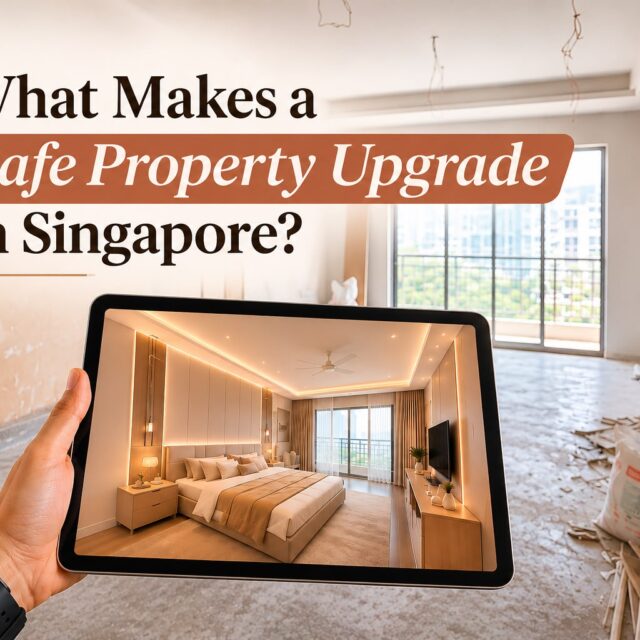
One common misconception when selling your property in Singapore is that expensive renovations will automatically translate into a higher selling price.
A seller may have invested heavily in a beautiful kitchen with built-in appliances, customised cabinets and premium finishes.
But what if the buyer has a completely different lifestyle?
They may prefer an open-concept kitchen, a different colour scheme or a layout that better accommodates their family’s needs.
The same applies to other renovation decisions.
Imagine a homeowner who combines two bedrooms into one spacious master suite. For the current owner, this may have been the perfect decision.
But for a family looking for three separate bedrooms, the same renovation could become an additional expense because they may need to reinstate the original layout.
Other examples include:
- Highly personalised built-in furniture.
- Customised storage that may not suit every household.
- Unusual colour schemes or design themes.
- Layout modifications that reduce the number of usable bedrooms.
- Expensive finishes that do not appeal to the intended buyer.
This does not mean renovations have no value.
A well-maintained, tastefully renovated property can be attractive to buyers who prefer a move-in-ready home.
However, the amount you spent on renovation does not necessarily determine how much a buyer is prepared to offer.
What feels like an upgrade to one homeowner may not be valuable to the next.
Before selling your property in Singapore, it is worth understanding which improvements enhance your home’s appeal and which are simply personal preferences.
2. A Beautiful View Doesn’t Always Make Up for an Impractical Layout
An unblocked view, natural light and good ventilation are attractive selling points.
But buyers also consider how comfortably they can use the space.
A property may look impressive in photographs, yet feel less practical when buyers walk through it.
Some features that may influence a buyer’s decision include:
- A household shelter positioned awkwardly along a walkway.
- Structural walls that limit opportunities for layout changes.
- A large balcony or roof terrace that occupies a significant portion of the floor area.
- Bay windows that restrict furniture placement.
- Bedrooms that are difficult to furnish.
- Long corridors that reduce usable living space.
These details may seem minor to sellers who have become accustomed to their homes.
But for someone viewing the property for the first time, they can influence how suitable the home feels.
Floor Area vs Usable Space
When selling your property in Singapore, remember that a larger floor area does not necessarily mean a more functional home.
For example, two condominium units may have similar floor areas, but one could offer a more efficient layout with better bedroom proportions and less circulation space.
Depending on their lifestyle, buyers may prefer a slightly smaller property that makes better use of its available space.
This is particularly relevant for families who need practical furniture arrangements, storage and comfortable living areas.
I have also discussed the importance of evaluating a property’s long-term appeal in my article on Condo Resale Potential in Singapore for S$2M–S$3M Buyers.
While a beautiful view can certainly enhance a property’s appeal, it is only one part of the overall buying decision.
Sometimes, a practical layout matters more than an impressive view.
3. Buyers Judge the Property Before They Enter
When preparing to sell a home, many homeowners focus on the interior.
They clean the living room, tidy the bedrooms and make sure the property looks presentable for viewings.
But one detail sellers sometimes overlook is the environment outside their unit.
When selling your property in Singapore, the viewing experience begins before the buyer steps through your front door.
Buyers may notice:
- Whether the common corridor is bright and welcoming.
- Whether the entrance is clean and uncluttered.
- How close neighbouring doors are to one another.
- Whether common areas are crowded with plants, laundry or makeshift partitions.
- The level of privacy around the unit.
- The general condition of the lift lobby and surrounding common areas.
I’ve encountered situations where the way neighbouring households use common spaces affects the overall viewing experience.
Even when the property itself is beautifully renovated, the surrounding environment may influence how buyers feel about living there.
Of course, sellers cannot control everything outside their homes.
However, they can prepare their own entrance, keep their belongings organised and ensure that the property creates a welcoming first impression.
Small Improvements Can Make a Difference
You do not necessarily need to spend thousands of dollars preparing your property for sale.
Simple steps such as decluttering, allowing more natural light into the home, addressing minor maintenance issues and arranging furniture neatly can help buyers appreciate the available space.
The objective is not to make your home look like a showroom.
It is to help buyers imagine themselves living there.
Buyers aren’t just evaluating the home. They’re imagining the everyday experience of living in it.
4. Set Realistic Price Expectations Based on Market Value
Pricing is another important consideration when selling your property in Singapore.
Homeowners naturally remember how much they paid for their property, how much they spent on renovations and how much effort went into making it their home.
But buyers approach the decision differently.
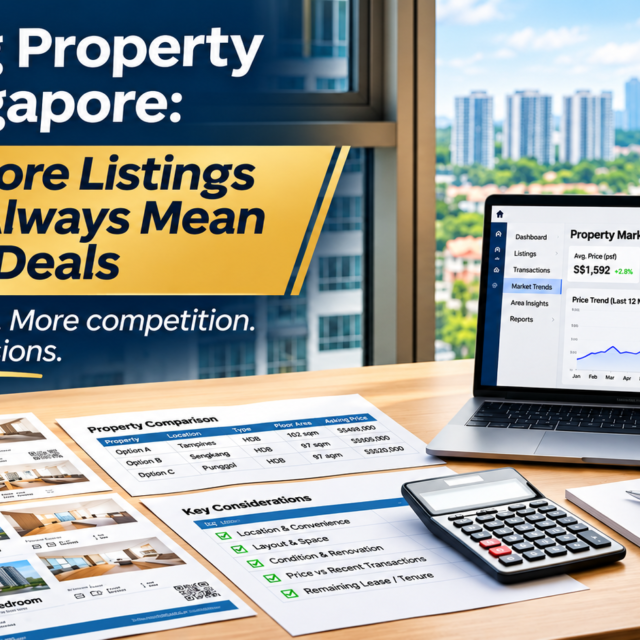
They are likely to compare your property with other available options, considering factors such as location, floor area, condition, remaining lease, layout and asking price.
A property’s asking price should therefore be considered in the context of the broader market, rather than solely based on the seller’s investment in the home.
Understand What Similar Properties Have Sold For
Before deciding on an asking price, I encourage sellers to review comparable property transactions.
For HDB flat owners, the HDB Resale Statistics provide useful information about resale prices across different towns and flat types.
Private property owners can refer to the URA Private Residential Property Transactions database to explore recorded transactions.
When reviewing comparable properties, consider differences in:
- Location and development.
- Floor level and orientation.
- Floor area and layout efficiency.
- Remaining lease or tenure.
- Renovation condition.
- Transaction date.
- Surrounding amenities and connectivity.
These factors can help explain why two seemingly similar properties may achieve different selling prices.
It is also important to distinguish between an advertised asking price and an actual completed transaction.
An asking price reflects what another seller hopes to achieve. A recorded transaction provides evidence of what was agreed in the market.
Neither should be considered in isolation.
I have shared further considerations for homeowners evaluating their property in 5 Questions to Ask Yourself About Your Existing Property.
When selling your property in Singapore, the objective is not necessarily to price your home as high as possible from the beginning.
It is to develop a realistic pricing strategy that reflects the property’s strengths, market conditions and your own selling objectives.
Your home’s emotional value and its market value are not always the same.
5. Position Your Property Around What Buyers Really Value
Effective property marketing is about more than taking attractive photographs and uploading a listing.
It begins with understanding who your potential buyers are and what matters most to them.
For example, a young family may prioritise the number of bedrooms, nearby schools, storage and practical living spaces.
A working professional may place greater importance on transport connectivity, location and convenience.
A buyer who intends to renovate may prefer a flexible layout over expensive existing finishes.
A buyer looking for a move-in-ready home may appreciate a well-maintained interior that requires minimal additional work.
Different buyers see value in different things.
Highlight the Right Selling Points
When selling your property in Singapore, I believe the marketing strategy should focus on the features that genuinely matter to the intended buyer.
Depending on the property, this could include:
- A functional and efficient layout.
- Convenient access to MRT stations and amenities.
- Good natural light and ventilation.
- Well-maintained interiors.
- Flexible spaces for growing families.
- Privacy and a comfortable surrounding environment.
The key is to communicate these advantages clearly and accurately through property photography, listing descriptions, video walkthroughs and viewings.
Rather than describing every renovation detail, it may be more meaningful to explain how the property can support a buyer’s everyday lifestyle.
Listen to Buyer Feedback Without Taking It Personally
Selling a home can be emotional, especially when you have lived there for many years.
You may have raised your children there, celebrated important milestones or spent considerable time creating a home you love.
But buyers do not have the same attachment.
When they comment on the layout, renovation or asking price, they are usually evaluating the property based on their own circumstances.
It is important to separate constructive buyer feedback from personal feelings about the home.
In my article on What Property Buyers and Sellers Fear Most in Singapore, I discuss the uncertainty homeowners can experience when making major property decisions.
As a property agent, my role is to help sellers understand buyer feedback, communicate their property’s strengths and negotiate without allowing emotions to take over.
Sometimes, the difference between attracting interest and receiving a serious offer is how clearly a property’s value is communicated.
What Should You Do Before Selling Your Property in Singapore?
Before putting your property on the market, I encourage homeowners to take a step back and assess their homes from a buyer’s perspective.
Ask yourself:
- What are the strongest selling points of my property?
- Which type of buyer would benefit most from this home?
- Are there any features that could affect a buyer’s decision?
- Is my asking price supported by comparable transactions?
- Does my property create a positive first impression?
- What is my next property move after selling?
For HDB homeowners, it is also important to understand the selling process, eligibility requirements and estimated sale proceeds.
You can refer to HDB’s official guide on managing the sale of your flat for further information.
Having a clear understanding of these considerations can help you approach the selling process with greater confidence and more realistic expectations.
Final Thoughts: Sell the Value, Not Just the Property
Selling your property in Singapore is not simply about highlighting how much money you have spent on your home.
It is about understanding what makes your property valuable to someone else.
Expensive renovations may attract certain buyers. A practical layout may appeal to others. Location, convenience, privacy and the surrounding environment can also influence a buyer’s decision.
There is no single feature that every buyer values equally.
That is why I believe an effective selling strategy starts with understanding the property, the market and the people most likely to buy it.
A successful property sale begins with seeing your home through the eyes of your potential buyers.
Planning on Selling Your Property in Singapore?
Whether you are selling an HDB flat, condominium or another residential property, understanding what buyers value can help you position your home more effectively.
Before deciding on your asking price or marketing strategy, let’s explore your property’s strengths, comparable transactions and your plans after selling.
Every property is different, and your selling strategy should reflect your individual circumstances.
Connect with me, Iris Ho, for a personalised property consultation, and let’s discuss how to position your property effectively for its next owner.


Leave a Reply