
The new EC rules in Singapore 2026 introduce significant changes for Executive Condominium buyers, including a longer 10-year Minimum Occupation Period (MOP), full privatisation after 15 years, the removal of the Deferred Payment Scheme (DPS) and greater priority for first-time buyers.
These changes apply to EC projects with land tender closing dates on or after 8 May 2026.
As a property agent, I believe these changes are especially important for HDB upgraders and families considering an EC as their next home.
To me, the message is clear: ECs are being positioned more strongly as long-term homes rather than short-term investments.
1. What Are the New EC Rules in Singapore 2026?
Under the revised framework announced on 8 May 2026, the key changes include:
- 10-year MOP: Increased from five years to 10 years, starting from the development’s Temporary Occupation Permit (TOP).
- 15-year full privatisation: Extended from 10 years to 15 years, delaying when units can be sold to foreigners.
- Removal of DPS: Developers can no longer offer the Deferred Payment Scheme for affected EC projects. Buyers must follow the normal progressive payment arrangement.
- 90% first-timer quota: Increased from 70%, with the priority period extended from one month to two years.
Importantly, these changes apply only to EC sites whose land tenders close on or after 8 May 2026.
Existing ECs and developments on sites tendered earlier remain under the previous framework.
Additional 2026 Update: Higher EC Income Ceiling
HDB also announced an increase in the monthly household income ceiling for new Executive Condominiums from S$16,000 to S$18,000.
This applies to new units in EC projects with land sale tender closing dates on or after 24 August 2026.
The higher income ceiling gives more eligible households an opportunity to consider an EC. However, buyers should check the requirements for their specific development, as projects under the earlier framework may still have the S$16,000 ceiling.
considering.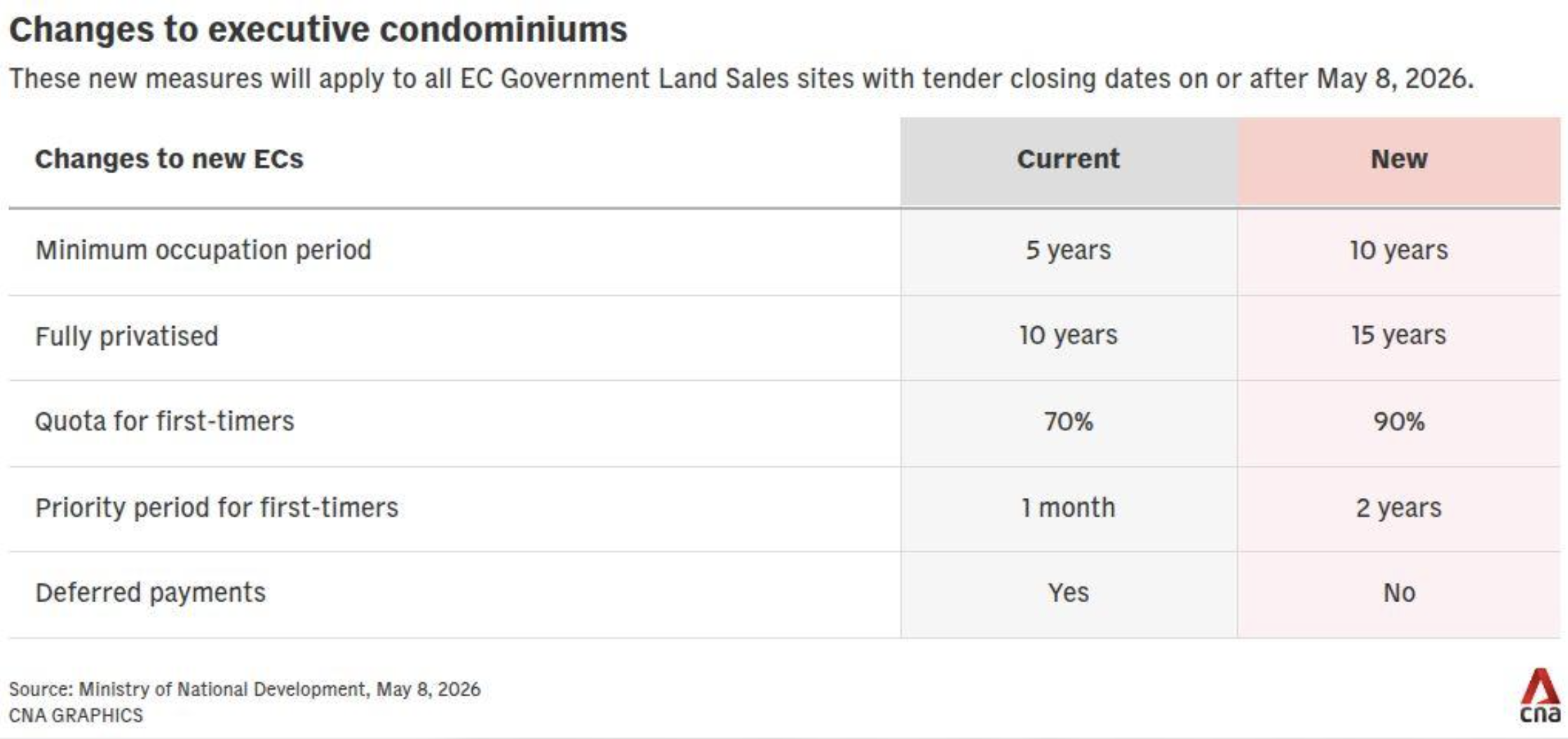
Figure 1: Changes to Singapore’s Executive Condominium rules announced on 8 May 2026. Source: CNA / Ministry of National Development.
2. What Do These Changes Mean for Buyers?
The new EC rules in Singapore 2026 affect different groups of buyers in different ways, particularly first-time buyers, HDB upgraders and those planning their next property move.
First-Time Buyers: More Opportunities
With 90% of units prioritised for eligible first-timer families during the first two years, more buyers may have the opportunity to secure an EC home.
The higher income ceiling also opens the door to households that previously exceeded the eligibility limit, provided they meet the applicable requirements.
However, greater eligibility doesn’t necessarily mean an EC is the right financial decision.
I still encourage buyers to consider their affordability, family needs and intended holding period before committing.
HDB Upgraders: More Financial Planning
For HDB homeowners planning to upgrade, the removal of DPS is an important consideration.
Without the deferred payment option, buyers of affected EC projects must follow progressive payments based on construction milestones.
This means understanding when payments are due and how they fit into your existing financial commitments.
Before upgrading, I encourage my clients to review:
- Available cash and CPF savings
- Existing mortgage commitments
- Expected payments for the new EC
- Timeline for selling their current HDB flat
- Financial flexibility if circumstances change
A property upgrade should improve your living situation without placing unnecessary pressure on your finances.
Qualifying for an EC doesn’t automatically mean the financial commitment will be comfortable.
Investment-Minded Buyers: A Longer Commitment
The revised 10-year MOP means owners must wait longer before selling their EC on the eligible resale market or renting out the entire unit.
With construction taking several years before TOP, the total commitment from booking can be considerably longer.
For buyers who may want to upgrade again, relocate or adjust their housing plans, this longer holding period deserves careful consideration.
An EC can still be an attractive long-term housing option, but buyers should understand that their flexibility will be more limited during the MOP.
3. Could Existing ECs and Private Condos Become More Attractive?
With the new EC rules in Singapore 2026 introducing longer holding periods, I believe some buyers may begin comparing existing ECs and private condominiums more closely.
Existing ECs under the previous framework retain their five-year MOP and become fully privatised after 10 years.
Private condominiums generally don’t have an EC-style MOP, offering greater flexibility when it comes to future property plans.
However, greater flexibility doesn’t automatically mean a better investment.
When advising my clients, I encourage them to look beyond the property type and consider several factors:
- Purchase price: Are you paying a reasonable price compared with similar properties?
- Financing: Can you comfortably manage the monthly repayments and other costs?
- Location: Will the property continue to appeal to future buyers?
- Holding period: How long do you realistically intend to stay?
- Resale potential: Who might buy the property when you’re ready to sell?
The right choice depends on your financial position, lifestyle needs and long-term goals.
4. What Should You Consider Before Buying an EC?
Before making a decision, I encourage buyers to ask themselves three questions.
Can I Comfortably Afford This Property?
Look beyond the initial downpayment. Consider your monthly mortgage, CPF usage, available savings and future financial commitments.
Will This Home Still Suit My Family in 10 Years?
Your needs may change as your family grows, children enter different stages of life or your work situation evolves.
Choose a home that can support your lifestyle beyond the next few years.
What Are My Options When I’m Ready to Move?
Even if you intend to stay long-term, it’s important to understand your future resale options.
Consider the potential buyer pool, surrounding developments and whether the property is likely to remain attractive in the years ahead.
A good property decision should work for your present needs while keeping your future plans in mind.
Conclusion: What Do These Changes Mean for Your Property Plans?
To me, the new EC rules reinforce the importance of buying with a long-term perspective.
For first-time buyers, they create greater opportunities. For HDB upgraders, they highlight the importance of financial planning. And for investment-minded buyers, they require a longer holding commitment.
As a property agent, my role is to help clients understand how these changes affect their options, affordability and future plans.
Because a good property decision isn’t just about what you can afford today. It’s about choosing a home that will continue to make sense for your family in the years ahead.
Considering an EC or Private Condo in Singapore?
Whether you’re purchasing your first EC, upgrading from an HDB flat or comparing ECs with private condominiums, understanding your options is an important first step.
Connect with me for a no-obligation property consultation. Let’s review your options, discuss the potential risks and find a property that aligns with your financial situation and long-term goals.




Leave a Reply