
A condominium may look like a good investment today. But whenever I evaluate a property with my clients, there’s one question I always encourage them to ask:
“At this price, is there still room for growth?”
When assessing a Singapore condo investment, I look beyond past price appreciation. I consider the entry price, past transactions, project age, future supply and whether the property will still appeal to buyers when it’s time to sell.
What worked for someone who bought five or ten years ago may not necessarily work for someone buying today.
That’s why I believe it’s important to look beyond a property’s current popularity or past performance and understand whether there’s still potential for future appreciation.
I Look Beyond Today’s Property Prices
Singapore’s private property market moves in cycles.
There are periods of strong price growth and periods when the market slows down.
When the market slows, some buyers see it as an opportunity to negotiate a better price. While that can be an advantage, I always remind my clients that a slower market doesn’t automatically make every property a good investment.
What matters to me is whether the entry price is reasonable and whether the property can remain attractive to future buyers.
Buying at a lower price doesn’t always mean you’re buying at good value.
Recent condominium resale price trends also show why it’s important to look beyond short-term market movements.
While prices may rise or fluctuate from month to month, these changes don’t necessarily tell us whether an individual property will be a good long-term investment. Buyers should also consider the property’s location, future demand and resale potential.
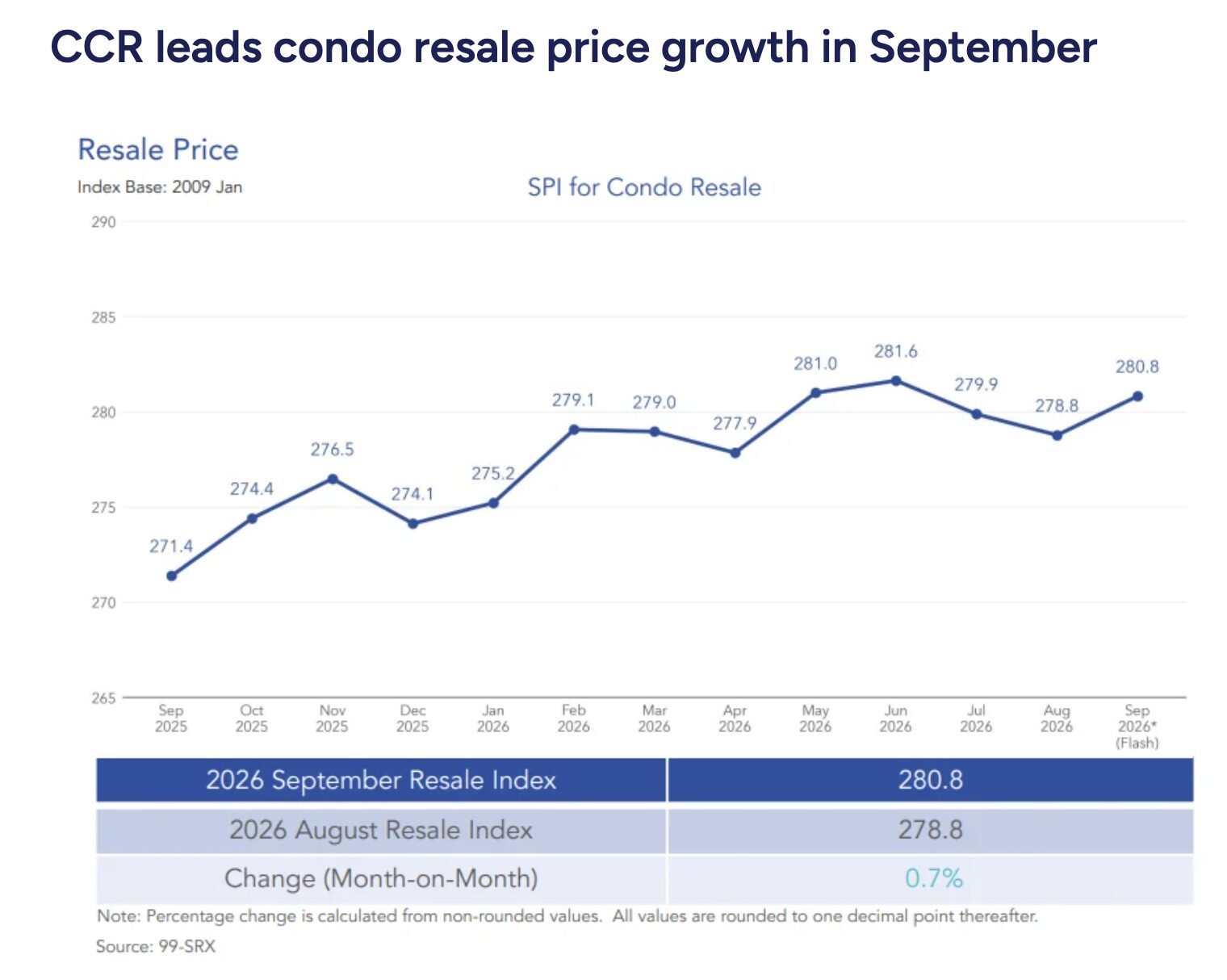
According to the September 2026 99-SRX flash report covered by 99.co, condominium resale prices increased by 0.7% month-on-month. However, overall market growth doesn’t necessarily indicate that every condominium offers the same potential for appreciation.
Compare New Launches, Newly TOP and Older Condos
When helping my clients evaluate their options, I don’t simply compare prices. I look at what each type of property offers and how it may perform over time.
- New launches: Buyers purchase a property before completion. I consider the launch price, waiting period and future competition.
- Newly TOP condos: These developments have recently received their Temporary Occupation Permit (TOP). Buyers can see the completed property, assess its facilities and potentially move in sooner.
- Older resale condos: Some offer larger layouts, established locations and more competitive prices. However, I also consider the building’s age, maintenance needs and future resale appeal.
For me, the question isn’t simply which property is cheaper.
It’s: “When my client is ready to sell, will the next buyer still see enough value in this property?”
Historical price trends also show why comparing different types of condominiums is important.
New launches, sub-sales and resale properties can have significant price differences. Understanding these differences helps buyers evaluate whether they are paying a reasonable price today and how their property might compete with other options in the future.
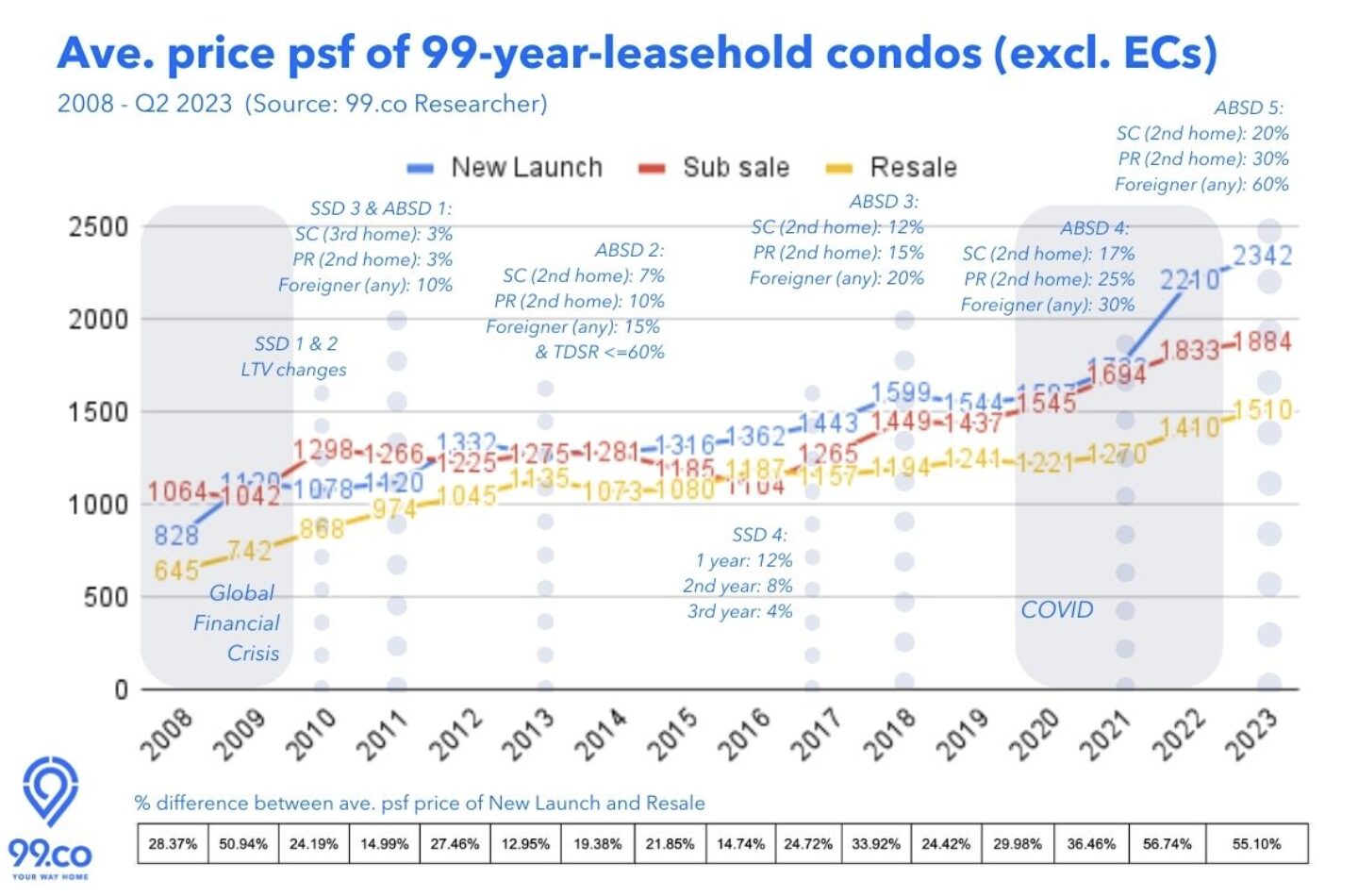
Historical data from 99.co, covering 2008 to Q2 2023, shows that average PSF prices for new-launch and resale condominiums did not increase at the same pace. This reinforces the importance of comparing properties based on their entry prices, age and future resale appeal, rather than assuming newer developments will always deliver better returns.
Evaluate the Numbers Before Looking at Potential Returns
Let me share a hypothetical example of how I would assess a condominium purchase.
Imagine my client is considering a condominium that’s almost 10 years old.
Earlier buyers purchased units at around $1,400 psf, but my client would be entering at approximately $1,900 psf.
If my client plans to sell in five years, they might hope to achieve $2,300 psf.
But here’s what I would ask them to consider.
By then, the condominium will be around 15 years old.
Would future buyers be willing to pay $2,300 psf for a 15-year-old property?
Or would they prefer a newer development nearby?
Now imagine newly completed condominiums in the same area are selling at around $2,100 to $2,300 psf.
Even though the price difference may not seem significant, future buyers might compare the developments based on age, facilities, layout and overall value.
Of course, a well-located older condominium may still offer advantages that newer projects cannot match.
But this is why I don’t evaluate a property’s potential based on its past appreciation alone.
I want to understand whether the price my client pays today still leaves room for a reasonable exit in the future.
Note: The prices above are illustrative examples, not actual transaction data or future price predictions.
5 Factors I Check Before Recommending a Singapore Condo Investment
When assessing a condominium’s potential for future appreciation, there are five important factors I consider.
- Entry price: Is my client buying at a reasonable price compared with similar properties in the area?
- Past transactions: How much did earlier buyers pay, and how has the development performed over time?
- Project age: How old will the condominium be when my client eventually decides to sell?
- Future supply: Are there upcoming developments that could compete with this property?
- Exit potential: Will future buyers still find this property attractive at the price my client hopes to achieve?
Beyond these five factors, I also look at transaction costs, financing commitments, holding periods and whether the potential returns justify the risks involved.
My goal isn’t simply to identify a property that has appreciated in the past.
It’s to help my clients understand whether the numbers still make sense for them today.
Conclusion: A Good Investment Starts With Understanding Your Exit
A condominium can still be a wonderful home even if its potential for capital appreciation is limited.
But when my clients are purchasing with investment goals in mind, I always encourage them to think beyond the current asking price.
A property that performed well for its previous owner may not necessarily deliver the same results for the next buyer.
That’s why I believe it’s important to understand the entry price, surrounding competition, future buyer demand and potential resale value before making a commitment.
Instead of simply asking:
“Is this cheaper than a new launch?”
I encourage my clients to ask:
“Will the next buyer after me still see value in this property?”
Because to me, a good property investment isn’t just about how much the property has appreciated. It’s about whether there’s still enough potential for the person buying it today.
The right property decision should make sense not only when you enter the market, but also when it’s time for you to exit.
Considering a Condo Purchase in Singapore?
If you’re exploring a new launch or resale condominium, I’d be happy to help you look beyond the asking price.
Together, we can review the numbers, compare your options and assess the property’s long-term growth and resale potential.
Connect with me for a personalised property consultation, and let’s explore what makes the most sense for your property goals.




Leave a Reply